
Hello and welcome back, my friend!
Let’s be brutally honest for a second: most communities treat onboarding like an afterthought. They fire off one generic welcome email that looks like it was written by a tired robot, then wonder why 60% of their new members go silent before the first week is even over.
If you lose someone in their first seven days, it’s not them. It’s you.
That first week is pure magic if you know how to use it. It’s the honeymoon phase when excitement is highest and skepticism is lowest. Miss this window and you’ll spend the next six months trying to win back attention you could have captured in six days.
Today I’m handing you the exact playbook I use with my clients—the same system that consistently turns complete strangers into active, enthusiastic, raving community members in under a week. No fluff. Just what works.
The Philosophy Behind the Playbook
Think of onboarding like hosting a dinner party. You don’t just open the front door, yell “food’s in the kitchen,” and disappear. You greet people warmly, take their coat, introduce them to someone they’ll click with, and make sure they have a drink in their hand within five minutes.
That’s what we’re doing here—except the “house” is your community and the “guests” are paying customers or highly targeted members you worked hard to attract.
Let’s go day by day.
Day 1: The Human Welcome That Stops the Scroll
My unbreakable rule: Never welcome a new member with only an automated email.
That classic “Welcome, [First Name]!” message is the community equivalent of a limp handshake. It screams “you’re just another number.”
Instead, I record a short, personal video. Thirty to forty seconds is perfect. I film it right on my phone, no fancy lighting required. Something as simple as:
“Hey Alex, it’s [Your Name]. I saw you just joined and I’m genuinely excited you’re here. Quick thing—go say hi in the #introductions thread and tell us what you’re working on. Can’t wait to see you inside.”
Then I drop that video into a clean, beautiful welcome page that includes:
– A 60-second community tour video
– The three non-negotiable rules (written in friendly, human language)
– One single first action (never a checklist)
The goal isn’t to educate them on everything. The goal is to get them to participate once. That first small action is everything.
Day 2: Hand Them the Exact Dish They’ll Love
This is where most communities make a painful mistake. They give new members the entire menu and watch them freeze with decision paralysis.
On Day 2, I send one highly targeted message based on what I know about them.
If they’re in B2B SaaS, I don’t say “Browse our resources.” I say:
“Hey Alex, since you work in B2B tech, I think you’ll get the most immediate value from our lead-gen script library. Here’s the direct link.”
One link. One promise. Zero overwhelm.
This is the “personal concierge” approach. You’re not showing them the whole buffet—you’re putting the perfect plate in front of them.
Day 3: Engineer Their First Win
Nothing hooks someone faster than quick status and connection.
This is where my community manager (or I) actively looks for an opportunity to tag them in a relevant conversation. Something like:
“@Alex, you asked about outbound messaging. @Sarah actually cracked this exact problem last month and her reply thread was gold. Sarah, any chance you could share the key lesson with Alex?”
Two things just happened: Alex got a useful answer and made a connection with a veteran member. That’s chemical. That’s sticky.
Days 4–5: Move Them From Consumer to Contributor
This is the pivot point. The moment we shift them from “person consuming the community” to “person adding to the community.”
I make a direct, specific ask that validates their expertise:
“Alex, saw in your intro that you’re brilliant at cold outreach. We have a thread where people are struggling with this exact thing. Would you be open to dropping just one tip that’s worked for you?”
Notice the wording. I’m not asking for an essay. I’m asking for one tip. Low friction, high validation.
I also publicly celebrate great behavior from other members. When someone posts something exceptional, I highlight it. This does two things: it shows the new member what “good” looks like and creates powerful social proof that contribution gets noticed.
Finally, I send a personal check-in: “Hey, how are you finding things so far?”
You’d be shocked how many people respond with genuine gratitude that someone actually asked.
Days 6–7: Lock In the Habit
We’re no longer trying to impress. We’re trying to create returning behavior.
On Day 6 I point them toward the heartbeat of the community—the recurring event that makes the space feel alive:
“Just a heads-up, our expert live Q&A is this Thursday at 11am EST. It’s where the real magic happens. Hope to see you there.”
I’m literally putting an appointment in their mental calendar.
On Day 7 I send an extremely short survey (two questions max):
1. What was the most valuable thing for you this week?
2. What was the most confusing?
This shows I respect their opinion and gives me incredible feedback for improving the experience.
Finally, I future-pace. I tease something coming next week that makes them not want to miss it.
“Next Tuesday we’re dropping the exclusive playbook on enterprise negotiation that we’ve been working on for months.”
The Framework, Simplified
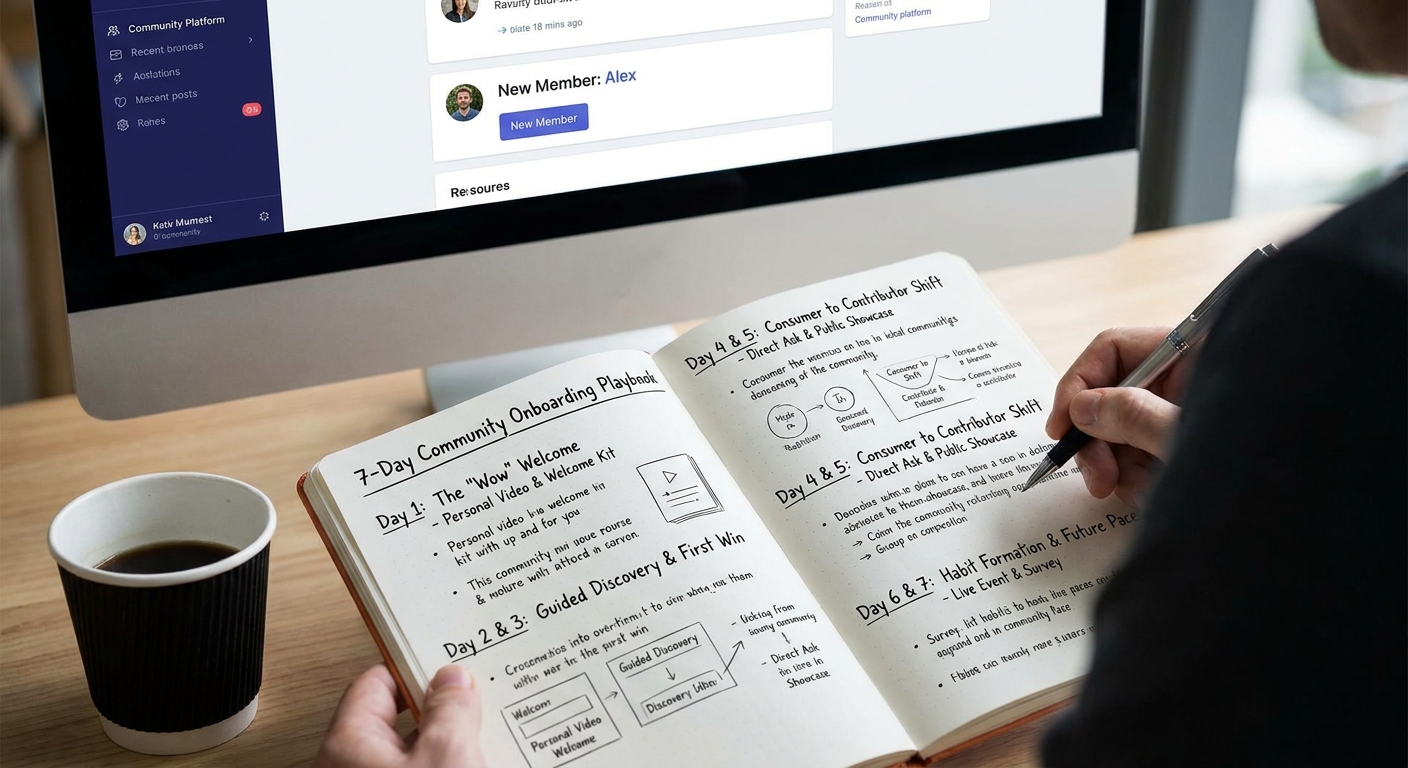
- Day 1: Wow Welcome (personal video + one clear action)
- Day 2: Guided Discovery (the perfect single resource)
- Day 3: Engineered First Win (connection + value)
- Days 4–5: Shift to Contribution (specific ask + recognition)
- Days 6–7: Habit Formation (event + feedback + future pacing)
This isn’t busywork. This is strategic relationship building disguised as simple touches.
The Bottom Line
A high-touch onboarding system isn’t extra credit—it’s the highest-leverage investment you can make in your community’s long-term health.
Communities that treat onboarding as an afterthought have revolving doors. Communities that treat it like a strategic journey build fortresses.
The difference isn’t in the brilliance of the content. It’s in the deliberate, consistent care shown during those first seven days.
You now have the playbook. The only question left is whether you’ll actually use it.
I’d love to hear from you—what’s the biggest struggle you’ve faced with new member onboarding? Drop your thoughts in the comments. The best insights usually come from you, not me.
Thanks for being here, friend. I’ll see you in the next episode where we’re tackling a much more complex (and frankly overdue) conversation: The Ethics of Community Data—privacy, transparency, ownership, and where the lines should actually be drawn.
Until then, go make someone’s first week feel legendary.
— Your Community Building Mentor