Hello and welcome back to the blog! I’m so glad you’re here for Episode 38 of The Busy Business Owner’s Guide to Marketing.
Have you ever had that feeling? You’ve been working hard on your SEO, you check your keyword rankings, and things look… pretty good! But then you look at your website traffic, and it’s just… flat. The line on the graph isn’t going down, but it’s certainly not going up. It’s a uniquely frustrating place to be, and I promise you, you are not alone.
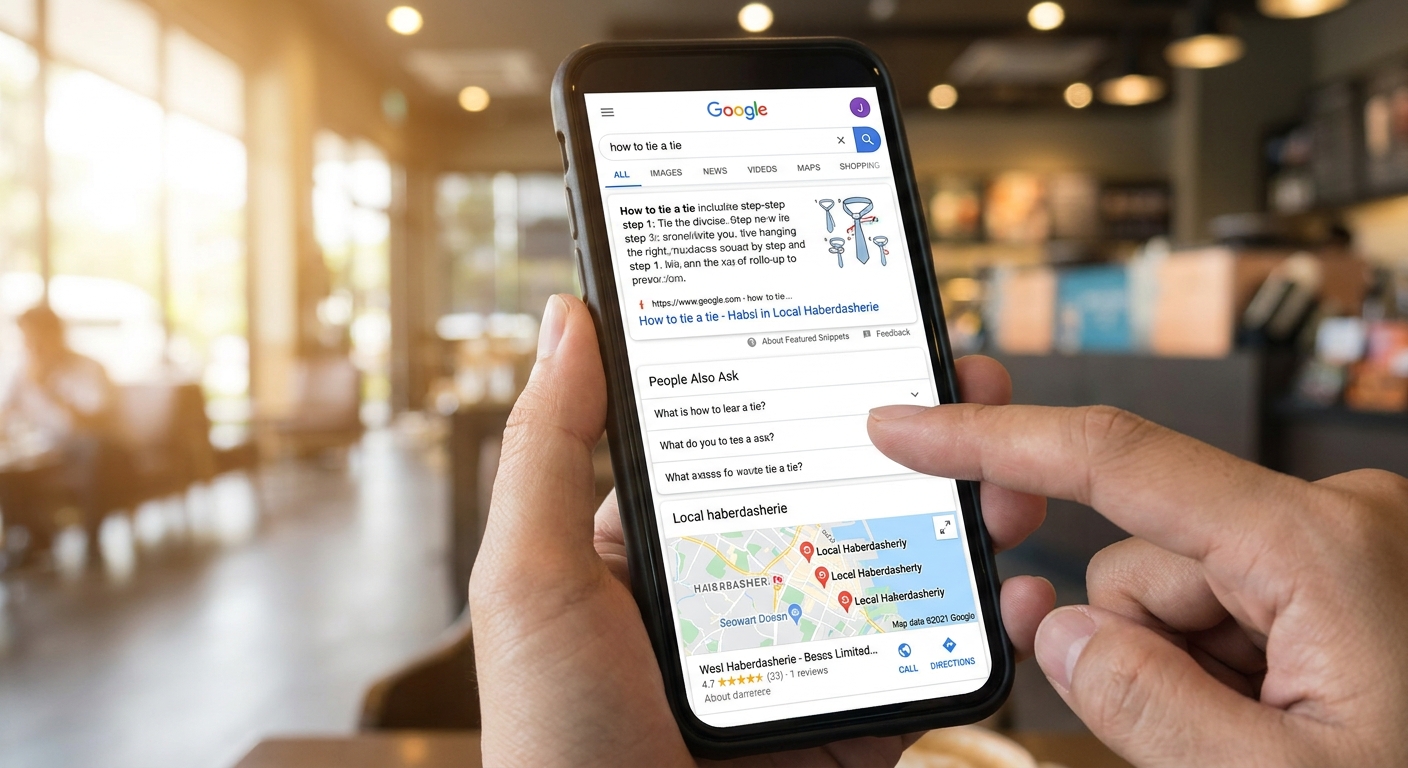
What you’re likely running into is what we call the ‘Zero-Click Search’ world. It’s a reality where your potential customers are getting the answers they need directly on the Google search results page, so they never actually have a reason to click through to your website.
Now, it’s incredibly easy to see this as a problem—a wall that Google has put up between you and your audience. But today, I want to help you reframe that thinking entirely. I see this as the new battlefield for winning customers. This is our new front line. So, in today’s episode, my goal is to give you three powerful, actionable strategies to not just survive but thrive in this new landscape, getting your brand seen and building authority even when your audience never leaves Google. Let’s dive in!
What Exactly Is a Zero-Click Search?
Before we get into strategy, let’s make sure we’re all on the same page. A ‘Zero-Click Search’ is simply when a user’s query is answered directly on the search engine results page (SERP), eliminating their need to click on any of the website links.
You see this every single day. Let me paint a vivid picture:
- You ask Google, “what is the weather in Austin Texas,” and a full forecast appears at the top. No click needed.
- You search for “how to boil an egg,” and a Featured Snippet gives you numbered steps right there. No click needed.
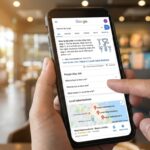
- You type in “restaurants near me,” and the Local Pack map shows you three options with their ratings and hours. No click needed.
- You wonder, “how tall is Mount Everest,” and a big, bold Answer Box tells you “8,849 m.” No click needed.
What’s happening here is that Google has fundamentally evolved. It’s no longer just a search engine—a librarian pointing you to the right aisle in the library. It has become an answer engine—the ultimate concierge for the internet, bringing the exact information you need directly to you, instantly.
Google’s number one priority is keeping the user happy and engaged on its own platform. This tells us one crucial thing: this trend is absolutely here to stay. Fighting it is like trying to swim against a powerful current. The smarter move is to learn how to navigate it, and that starts with our first strategy.
Strategy 1: Become the Answer and Win the Snippet
If you can’t bring the user to your website, then you have to bring your brand to the user. The most valuable digital real estate in a zero-click world is that prime spot at the very top of the results page. I’m talking, of course, about the coveted Featured Snippet.
Winning this spot instantly positions your brand as the authority. So, how do we do it? My process here is to stop thinking about writing a blog post and start thinking about creating an answer. Here’s how you can structure your content to make it ridiculously easy for Google to choose you:
- Target a Specific Question: Identify a very common, very specific question your ideal customer is asking. Don’t target a broad keyword like “marketing”; target a question like “How much should a small business spend on marketing?”
- Use the Question as a Heading: Make the question an actual heading (like an H2 or H3) in your article. This is like a giant signpost for Google.
- Provide a Direct, Concise Answer: Right below that heading, provide a clear, direct, and concise answer in a single paragraph of about 40-60 words. Get straight to the point. No fluff.
- Format for Skimming: Google loves structured information. If the answer lends itself to it, use a bulleted list or a numbered list for steps. This formatting is like pre-packaging the answer for Google, making it incredibly easy for its algorithm to just lift it and place it in the Featured Snippet box.
You’re essentially writing Google’s script for it. When you make the answer clear, concise, and perfectly formatted, you’re not just hoping to get chosen—you’re making your content the most logical and compelling choice.
Strategy 2: Optimize Your New Digital Front Door
For decades, we’ve thought of our website’s homepage as our digital front door. It’s time for a mental shift. In many cases, your Google Business Profile (GBP) is now the first, and sometimes only, interaction a local customer will have with your brand.
This is why my second strategy is all about optimizing your presence inside Google’s own world. My unbreakable rule here is to treat your Google Business Profile like a second website. It shouldn’t be a static listing you set up once and forget. It should be a living, breathing hub of activity.
Here’s my personal checklist for a killer GBP:
- Google Posts: Are you using them? You should be! Share promotions, blog updates, company news, and special offers. They expire, which tells you they are meant for fresh, timely content. An active Posts section signals to both Google and customers that you are open and engaged.
- Q&A Section: Proactively populate this yourself! Think of the top 5-10 questions you always get and ask-and-answer them on your own profile. When customers ask questions, answer them promptly.
- Services & Products: Keep this section meticulously updated. It’s a fantastic way to showcase what you do without requiring a click.
- Photos & Videos: Keep them fresh! Add new photos of your team, your work, and your location regularly. A picture from 2017 doesn’t exactly scream “thriving business.”
And for a little bonus tip: look into Schema Markup for your website. Think of schema as a secret language you speak directly to search engines. It’s code you add to your site that doesn’t change how it looks, but it tells Google what your content is. It’s like spoon-feeding Google key info, helping you earn those eye-catching review stars, event dates, or recipe times right there on the search page. It’s another way to stand out, even without a click.
Strategy 3: Answer, Tease, and Build Your Brand
Okay, it’s fantastic to win the zero-click answer. It builds authority. But let’s be honest—we still want to bring that customer to our digital home, our website, where we can truly nurture a relationship.
This is where our third strategy comes in. I call it the “Answer and Tease” method. The goal is to satisfy the user’s immediate need while creating enough curiosity to earn that click.
Here’s how it works. You structure your content to provide that quick, snippet-worthy answer right at the top, just like we discussed in Strategy #1. But immediately after you give them the answer, you tease the compelling next question.
Let’s use an example. Say the question is, “How much does a new website cost?”
Your snippet-optimized answer might give a clear price range. But right after that paragraph, you could add something like:
“But getting the initial quote is only half the battle. We’ve found there are 3 hidden costs most agencies don’t tell you about until it’s too late. Let’s break them down so you can avoid a nasty surprise.”
See what we did there? We gave them the instant gratification they came for, but we also opened a curiosity gap. We showed them that there’s more to the story—valuable information they can only get by clicking.
Even if they don’t click that time, you’ve achieved something profound. Every single instance where your brand name provides a direct, helpful answer builds incredible authority. You’re depositing trust into their “brand bank.” The next time they have a more complex problem, one that can’t be solved by a simple snippet, who do you think they’ll remember? The brand that’s been helping them all along.
Bringing It All Together
The zero-click world isn’t a dead end; it’s a new beginning. It forces us to be sharper, more helpful, and more present than ever before. The three core strategies we covered today really boil down to this:
- Win the Snippet: Structure your content to directly answer your customer’s questions in a format Google loves.
- Master Your Front Door: Treat your Google Business Profile as a dynamic, active hub for your brand.
- Earn the Click: Provide the immediate answer, but always entice users with the compelling ‘next question’ to build curiosity and long-term brand authority.
The real win here is a shift in perspective. It’s about meeting your customers exactly where they are, with exactly what they need, at the exact moment they need it. When you do that, you’ll win their attention, their trust, and eventually, their business.
I hope this helps you navigate the new front lines of search! I’d love to hear your thoughts or questions in the comments below. Have you tried any of these strategies? What’s worked for you?
Join me next time for Episode 39, where we’ll tackle a critical question: now that you’re capturing attention, is your core message actually getting through? We’ll cover that and more in ‘Is Your Brand Messaging Clear or Confusing? The 5-Second ‘Grunt Test’.’ You won’t want to miss it!