Hello and welcome back, friend!
Today we’re tackling something that might make a few gurus shift uncomfortably in their seats. Episode 21 of Successful Community Building for Sales and Influence is called The Anti-Influencer — and yes, we’re going there.
Let me paint a vivid picture. Imagine building a beautiful, roaring digital campfire. You’re the one who gathered the wood, struck the match, and got the flames dancing. But instead of standing in front of it telling stories every single night, you pull up a chair like everyone else and say, “Okay… who’s got a good story tonight?”
That’s the entire philosophy.
I’ve watched too many brilliant founders build communities that revolve entirely around their own energy, opinions, and availability. What starts as an exciting mission slowly turns into a very expensive, very exhausting personal brand hamster wheel. And I don’t want that for you.
The Guru Model: A Trap Disguised as Success
You know the model I’m talking about. Every post, every live, every piece of value flows from one central person — you. The community becomes a fan club with you as the permanent headliner.
I once worked with a founder running a six-figure community. Her entire business rested on her doing three live calls every single week. She was making great money, but she was completely fried. The moment she tried to take a vacation, engagement plummeted and members started grumbling.
That’s not a community. That’s a one-woman variety show with extremely expensive burnout as the finale.
The painful truth? When everything depends on you, you haven’t actually built a community. You’ve built a very sophisticated fan club with a single point of failure — you.
The Anti-Influencer Mindset Shift
Here’s where it gets exciting.
The Anti-Influencer approach flips the script. Your job isn’t to be the star performer. Your job is to be the architect and facilitator — the person who builds the campfire, makes sure it’s safe and warm, then creates the conditions for everyone else to shine.
You move from being the “sage on the stage” to the “guide on the side.” And trust me, this is one of the most liberating shifts you’ll ever make as a leader.
My unbreakable rule now is this: If I’m the most interesting person in my community, I’ve failed.
The magic doesn’t happen when people admire your expertise. The magic happens when they discover each other.
How to Actually Decentralize (Practical Tactics)
Alright, enough philosophy. Let’s get tactical. Here’s exactly how I put this into practice:
1. Member Spotlights (The Spotlight Stealer)
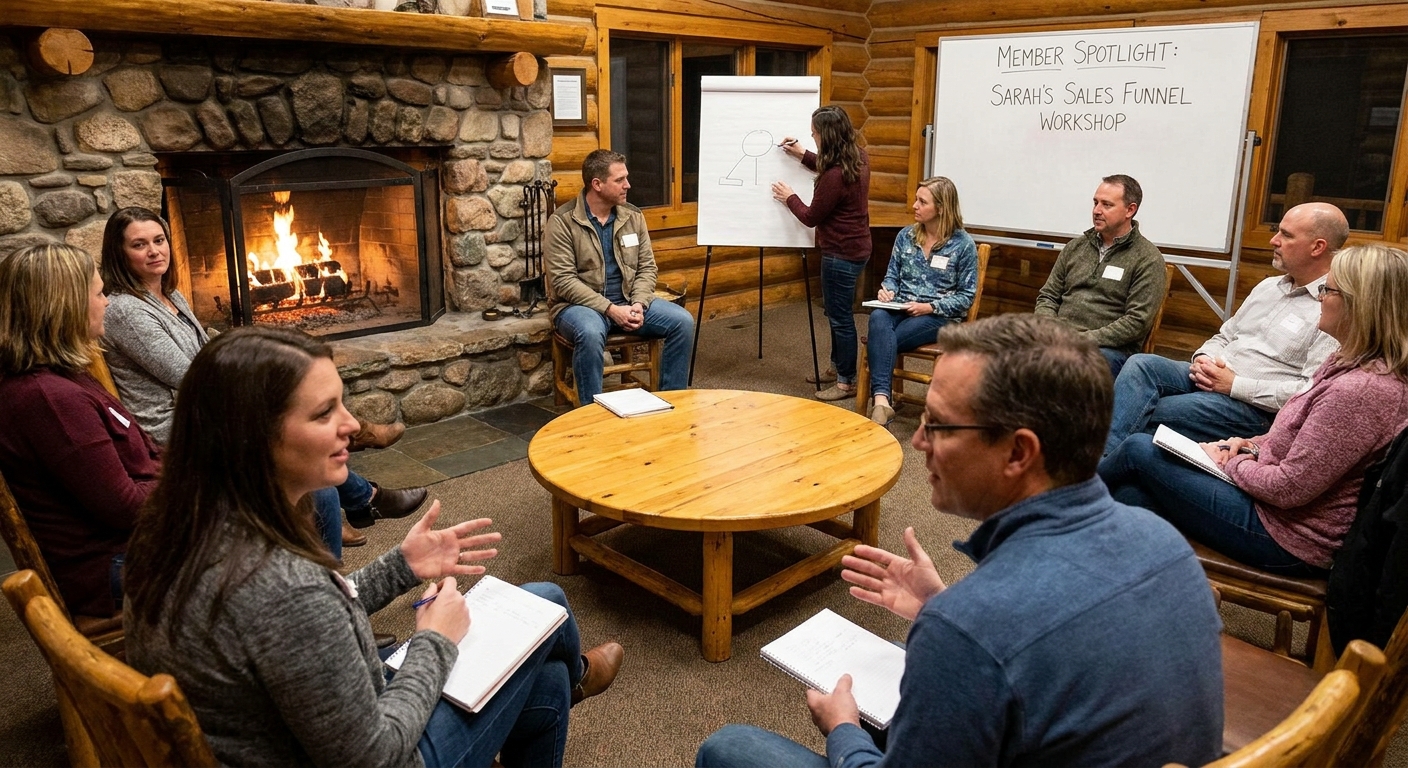
This is stupidly simple and ridiculously effective. Once a week, I choose a member doing meaningful work and put the focus entirely on them. I interview them, ask them to share their best lessons, and let the community celebrate them.
The first time I did this, I was nervous. What if people miss me? The opposite happened. Engagement went up and the community suddenly felt more alive.
2. Peer-Led Workshops (Give Away the Stage)
Stop creating all the content yourself. Look for the quiet experts in your group.
I once had a member who was an absolute wizard with sales funnels. Instead of turning his knowledge into my course, I gave him the stage to run a workshop. I promoted it heavily, showed up as a participant, and let him be the hero. The community got incredible value, he got recognition and new clients, and I got to take a breath.
3. Automated Conversation Prompts
Some of my best “content” isn’t content at all. It’s a simple recurring thread called “Wins Wednesday.” I set it up once and the community runs with it. The conversations that emerge are often better than anything I could post myself.
4. The Ambassador Program (Share Real Ownership)
When your community reaches a certain size, create a formal ambassador or moderator program. The goal isn’t to get free labor (though that’s nice). The real goal is to distribute ownership.
People protect what they own. When members feel genuine ownership, they don’t just participate — they defend and grow the culture.
How to Know If You’re Actually Succeeding
Here’s where most people get it wrong. They keep measuring the wrong things.
Stop obsessing over how many likes your posts get. That’s ego talking.
Instead, track these three things:
- Member-initiated posts vs. your own (I like to see this ratio flip over time)
- Reply depth — Are members having rich conversations with each other without you in the thread?
- Response time from members — When someone asks for help, how often does another member jump in before you even see the question?
When those numbers start moving in the right direction, you’ll feel something remarkable: the community developing its own heartbeat.
The Beautiful Freedom on the Other Side
Here’s what nobody tells you about this approach.
When you successfully decentralize your community, you don’t just reduce burnout. You create something that can actually outlive your daily involvement. You build real equity instead of a fancy job that happens to have “founder” in the title.
The community becomes more resilient, more valuable, and frankly, more fun.
It stops feeling like a performance and starts feeling like a movement.
Your Next Move
You don’t have to blow up your current approach overnight. Start small. Pick one member this week and shine the spotlight on them completely. Then do it again next week. Watch what happens.
The goal isn’t to become irrelevant. The goal is to become anti-fragile.
Because the most powerful communities aren’t built around one person’s energy. They’re built around shared purpose, mutual respect, and distributed leadership.
That’s the Anti-Influencer way.
Thanks for hanging out with me today! I’d love to hear where you are on this journey. Are you still the center of your community universe, or have you started shifting the spotlight? Drop your thoughts in the comments.
Next week we’re getting into something every paid community creator loses sleep over: Managing Churn in Paid Communities: Proactive Retention Strategies. We’ll dig into the nitty-gritty of keeping your best members engaged and subscribed for the long haul.
Until then, keep building wisely.
Catch you in the next episode,
Your fellow community architect