Hello and welcome back to Successful Community Building for Sales and Influence!
Today we’re getting extremely specific, and I’m genuinely excited about this one. We’re talking about hyper-local communities — the smartest, most underused strategy for turning online connections into handshakes, trust, and actual revenue in your own backyard.
While everyone else is chasing the glittering vanity metric of a massive global audience, you and I are going to talk about becoming a big deal in a small pond. Because here’s the truth most people won’t tell you: being the most influential voice in your town beats being the 1,247,892nd most influential voice online… every single day of the week.
Let me paint a vivid picture for you.
Why Hyper-Local Is Secretly Unfair
There’s something almost magical that happens when people realize you’re not just another person on the internet — you’re their person. You live down the street. You understand the same school district headaches, the same construction nightmares on Main Street, and the same pride in the new taco truck that just opened.
This creates what I call “neighbor trust.” It’s the kind of trust that national brands spend millions trying to manufacture but can never quite buy.
I’ve watched this play out repeatedly. The real estate agent who started “New Families in Austin” didn’t just sell houses — she became the first local friend new arrivals met. She answered questions about which pediatrician actually listens, which middle school has the best music program, and where to get decent coffee before the 7:14 train.
She stopped being “a realtor” and started being their realtor. That’s not marketing. That’s community.
The three massive advantages of going hyper-local are:
- Instant credibility — You’re not some faceless expert. You’re the neighbor who gets it.
- Competition annihilation — It’s much easier to be #1 in your town than #1 in the world.
- Seamless online-to-offline conversion — A DM becomes coffee, which becomes a client, which becomes a raving fan.
Where Should You Actually Build This Thing?
Let’s not overcomplicate this.
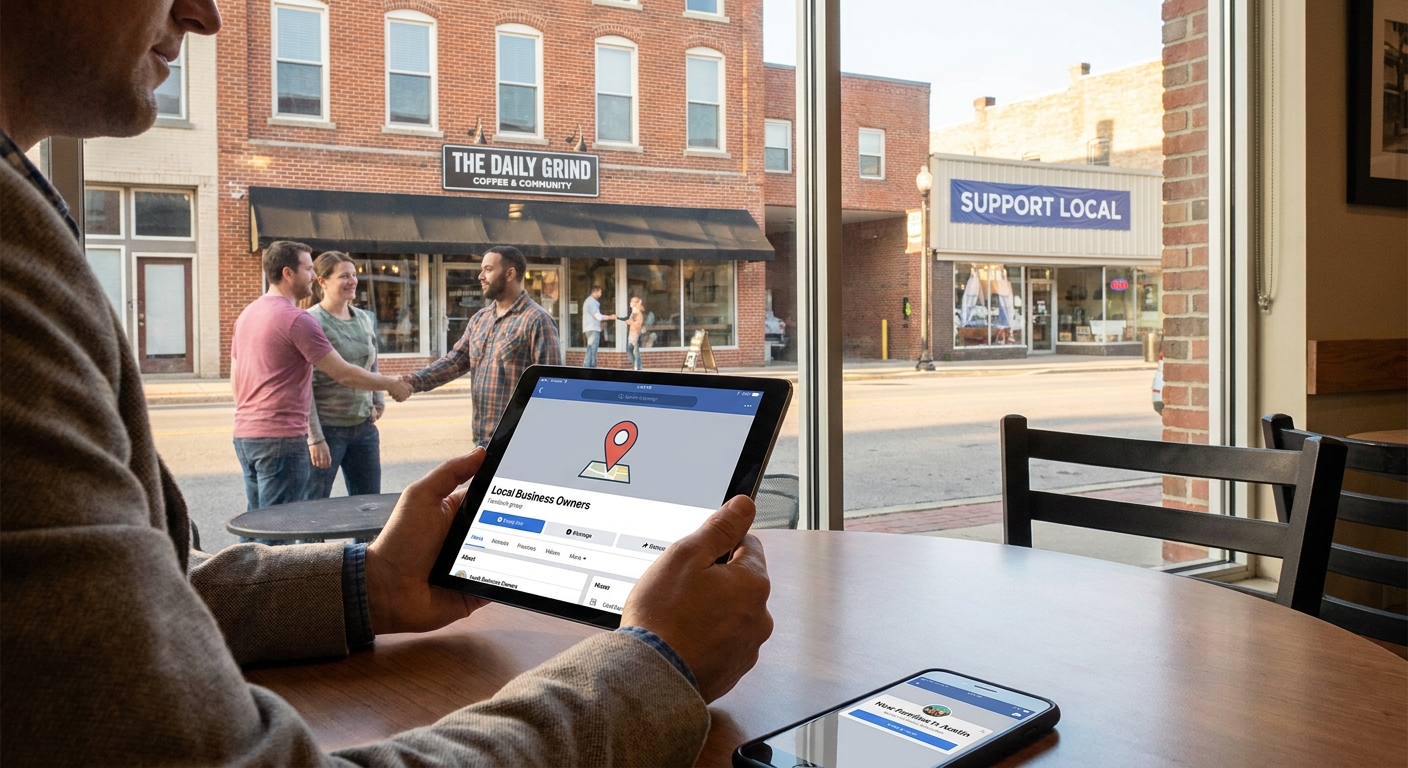
The winning move, in most cases, is a Facebook Group. Yes, I know. Facebook sometimes gets a bad rap, but here’s the thing — everyone’s grandma is on there. And grandmas talk. Your target audience’s parents and neighbors are on there. The algorithm actually favors active groups in local areas.
Nextdoor can work beautifully, but I’ll be honest with you — it’s often a minefield of passive-aggressive posts about lost cats and neighbors who don’t pick up after their dogs. Use it, but don’t rely on it as your main hub.
Local Subreddits can be fantastic if your audience skews younger and tech-savvy. The key isn’t the platform. It’s the specificity of the group.
“My Town” is a lazy name that creates a lazy community.
Instead, I want you to get surgical. Think:
– “Dog Lovers of Franklin County”
– “Women Business Owners of Charleston”
– “New Parents in Maplewood”
– “Craft Beer Enthusiasts of Asheville”
Do a quick search right now. If there are already three active “foodie” groups in your area, maybe you start the one for people who love hosting dinner parties, or the one specifically for home cooks who hate complicated recipes.
Find the gap and own it completely.
The First 50 Members (The Part That Feels Like Shouting Into the Void)
Every successful community builder I know has lived through this awkward phase. It feels like hosting a party where you’re not sure anyone will show up.
Here’s exactly what I do (and what I recommend you do):
Step 1: Start with your warm network.
Go through your phone. Send personal messages — not copy-paste spam — to every local friend, colleague, former client, and neighbor. Tell them what you’re building and why it matters. Personal invitation beats broadcast every time.
Step 2: Find a perfect local partner.
If you’re building a dog lovers group, partner with the most respected groomer or veterinarian in town. Their endorsement is worth more than any ad.
Step 3: Bridge the physical and digital worlds.
Put flyers with QR codes in the local coffee shop. Mention the group at your Chamber of Commerce meeting. Bring it up during your kid’s soccer game. The magic happens when online and offline start feeding each other.
Content That Makes People Feel Like They Belong
This is where most local groups die slow, quiet deaths.
Your content cannot be generic. Ever.
Instead of posting another “Motivational Monday” quote, ask: “Who’s tried the new elementary school’s lunch program and lived to tell the tale?”
Celebrate local wins. Run polls about the controversial new development on Route 4. Share photos when a member’s business hits a milestone. These aren’t just posts — they’re signals that say, “You’re in the right place. These are your people.”
My unbreakable rule: If someone who doesn’t live here wouldn’t understand why this post matters, it’s probably a great post.
Turning Your Community Into a Money-Making Machine
Now let’s talk about the part that makes some people uncomfortable: monetization.
Look, influence that doesn’t pay the bills is just an expensive hobby.
For service providers — financial advisors, landscapers, consultants, realtors, fitness trainers — your hyper-local community becomes the most powerful, trust-filled lead generation system you’ll ever have. You’re not “selling.” You’re the trusted expert who happens to live down the street.
Some of my favorite ways to generate revenue from these groups:
- A paid “Featured Business of the Week” sponsorship (local businesses pay to be highlighted)
- A premium local business directory
- Exclusive member events (both virtual and in-person)
- Your own premium offerings that now sell themselves because of the trust you’ve built
When you become the central connector in your local economy, interesting things start happening. The newspaper calls you for quotes. Other business owners want to collaborate. Opportunities start showing up in your inbox instead of the other way around.
Your Simple Next Step
Before you do anything else, I want you to answer one question:
What gap exists in your town that you’re uniquely positioned to fill?
Don’t overthink it. Just pick one idea. Even if it feels small. Especially if it feels small.
The most powerful communities I’ve seen started with someone saying, “You know what this town really needs…?”
That’s it for today, my friend.
Next week we’re diving into something that will completely change how you think about content. We’re calling it “The Content Repurposing Engine: Turn Community Conversations into Infinite Content.” You’ll learn how to mine the gold from your community conversations and transform them into blogs, videos, podcasts, social posts, and more — on autopilot.
I can’t wait to share it with you.
In the meantime, drop a comment below and tell me: What hyper-local community could you start in the next 30 days? I read every single comment and love hearing your ideas.
Until next time — go build something meaningful in your own backyard.
Talk soon,
Your Community Building Mentor<|eos|>