Hello and welcome back, my friend.
Let me paint a vivid picture for you: You’ve poured weeks (maybe months) into creating something you’re genuinely proud of. The cart opens. And then… nothing. Just the soul-crushing sound of crickets while your heart sinks into your stomach.
I’ve been there. It’s brutal.
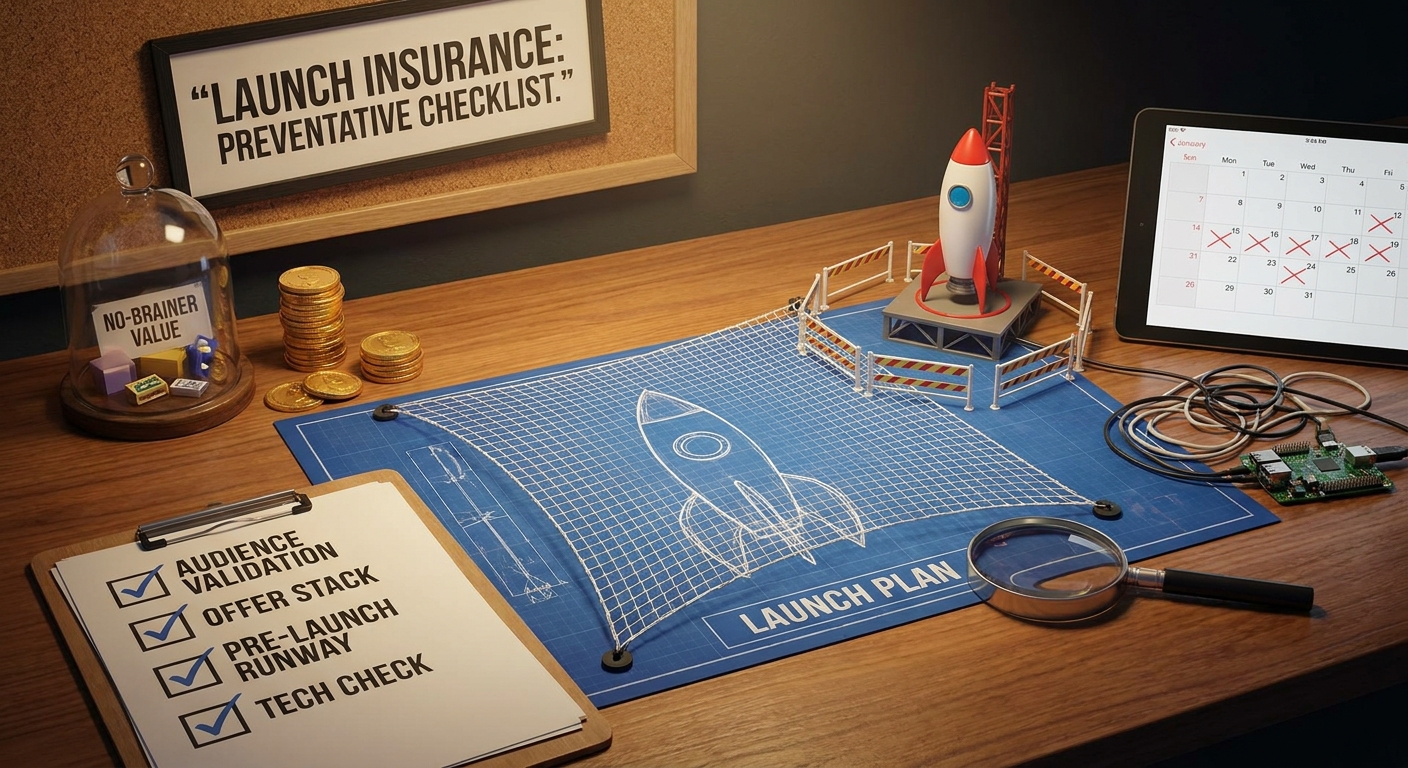
That’s exactly why today’s episode exists. We’re building your launch insurance policy—a simple, preventative checklist that dramatically reduces the risk of any new offer you create.
And before you roll your eyes thinking this is more work, let me reframe it. This isn’t extra labor. It’s a strategic safety net for your time, money, energy, and emotional well-being. When you follow this process, launches stop feeling like a terrifying gamble and start feeling like the natural result of smart preparation.
Ready? Let’s dive in.
Step 1: The Audience Validation Litmus Test
The biggest mistake I see (and it’s painfully common) is building something beautiful in a vacuum based on nothing more than a hunch.
You know what I’m talking about—spending hours creating a course, program, or service because “people have been asking for this.” The problem? Compliments don’t pay the bills.
My unbreakable rule: Never fully build before you validate.
Instead of sending out a survey that asks the dangerously misleading question “Would you buy this?”, I want you to look for commitment. Real market proof always involves either time or money.
Here are the three validation methods I recommend, from lightest to strongest:
- A simple landing page with a pre-sale offer at a significant discount
- A waitlist that requires a small deposit to hold their spot
- My personal favorite: a small, paid beta-test group that co-creates the solution with you
When people pull out their credit card—even for a fraction of the final price—you know you have something real. That little transaction flips the entire game from hopeful guessing to confident creation.
Step 2: Engineering the ‘No-Brainer’ Offer Stack
Once you know people actually want what you’re selling, it’s time to make it almost ridiculous to say no.
Think of this like building a Jenga tower of value—except you’re making it impossible for the tower to fall.
Start by getting crystal clear on the core transformation. Not what you’re selling, but what their life or business looks like after working with you. This is your foundation.
Next, add three to five high-value bonuses that solve related problems. These shouldn’t be random afterthoughts. They should feel like the missing pieces your audience has been desperately searching for.
I once worked with a client launching a social media course. She was getting decent interest but conversions were lukewarm. We added one simple bonus—a pack of smart Canva prompt templates—and suddenly her conversions exploded. Why? Because it gave people an instant win. They could see results before they’d even finished the first module.
Then comes the psychology part. You need a clear price anchor and a compelling guarantee.
When you can legitimately say, “This entire package is valued at over $2,000, but today you’re getting it for just $397,” you create a powerful perception of value. And when you add a risk-reversing guarantee—whether it’s a 30-day money-back or a “results or I’ll coach you personally” promise—you remove the final friction.
The goal is simple: You want your ideal customer to think, “I’d be silly to say no to this.”
Step 3: Building the Pre-Launch Runway
This is my favorite part of the entire process.
Think of your launch like an airplane. You don’t just gun the engines and hope it gets off the ground. You need a runway.
The pre-launch runway is that beautiful two-to-four-week period before you open the cart. During this time, you’re not selling hard. You’re setting the stage.
What I like to do is create a steady drumbeat of content that takes your audience on an emotional and intellectual journey:
- Educate them on the problem they’re facing
- Agitate the real pain and consequences of not solving it
- Tease the solution you’ve created
You might run a free webinar, a 5-day challenge, or a powerful email series. The magic happens when your paid offer becomes the obvious next step rather than a random sales pitch.
I can’t tell you how many times I’ve heard students say after a well-executed pre-launch, “I was already planning to buy before you even opened the cart.” That’s the feeling you’re going for.
Step 4: The (Not-So-Glamorous) Tech Check
Here’s where so many otherwise brilliant launches go to die—in the tech.
Nothing kills momentum faster than a broken checkout page or an email sequence that never fires. The solution is boring but incredibly effective: create a simple checklist and actually use it.
Here’s what I do every single time:
- Test the entire sales funnel myself. I click every link, fill out every form, buy the offer, and make sure the thank-you page and welcome email arrive. No assumptions allowed.
- Write and schedule every launch email in advance. Cart open, value emails, urgency reminders, cart close—get them all done and scheduled.
- Prepare a simple customer service plan. Write out answers to the five most common questions you expect. Decide who handles support and how.
This step might not be sexy, but it’s the difference between calm confidence and launch-day panic.
The Four Pillars of a De-Risked Launch
Let’s recap the insurance policy we’ve built together:
- Audience Validation – Confirm people will actually buy before you build
- The No-Brainer Offer Stack – Create something so valuable it feels silly to say no
- The Pre-Launch Runway – Build excitement and trust before opening the cart
- The Tech Check – Make sure everything works when it matters most
When these four pillars are in place, launching stops feeling like playing roulette with your business and starts feeling like a strategic, methodical process.
And here’s the beautiful part: each successful launch gets easier because you’ve built trust, gathered testimonials, and refined your process.
Now the interesting question: Once you have a great offer and a solid launch process, how much does you—the founder—actually matter?
That’s exactly what we’re exploring in next week’s episode 27: Your Personal Brand as the Founder: Asset or Liability?
I can’t wait to dive into that one with you.
In the meantime, I’d love to hear from you. What’s the scariest part of launching for you right now? Have you ever had a launch that flopped spectacularly? Drop your thoughts in the comments—I read every single one.
Until next time, keep building with confidence and protecting that beautiful energy of yours.
Talk soon,
Your Busy Business Mentor
Want this checklist as a downloadable PDF? Comment “LAUNCH” below and I’ll send it straight to your inbox.