
Hello and welcome back, friend.
Let’s talk about the topic that makes even the most confident community leaders wake up in a cold sweat at 3 a.m.: money.
You’ve poured your heart into building something genuine. Members trust you. They show up. They share vulnerably. Then the bills start piling up and suddenly you’re staring at the very real need to generate revenue without torching the trust you’ve worked so hard to earn.
I’ve watched it happen more times than I can count. A well-meaning leader brings in a “sponsor,” a few logos appear, a couple of awkward promo posts go out, and just like that the vibe shifts. The safe space starts feeling like a billboard. Members feel it. They leave. And the leader is left wondering where it all went wrong.
Today we’re solving that exact tension.
The real question isn’t whether you should monetize. It’s how you can create partnerships that actually enhance the member experience instead of cheapening it. Done right, these partnerships become one of the most valuable things you can offer your community. Let me show you exactly how I do it.
Why “Sponsor” Is a Dirty Word
The first thing I do with every client is ban the word sponsor.
That word carries heavy baggage. It whispers “we paid for access to your audience.” It feels transactional because it is transactional.
I replace it with Community Partner.
This isn’t fluffy semantics. It’s a complete mindset shift.
A sponsor buys eyeballs.
A community partner invests in your members’ success.
There’s a world of difference between those two things.
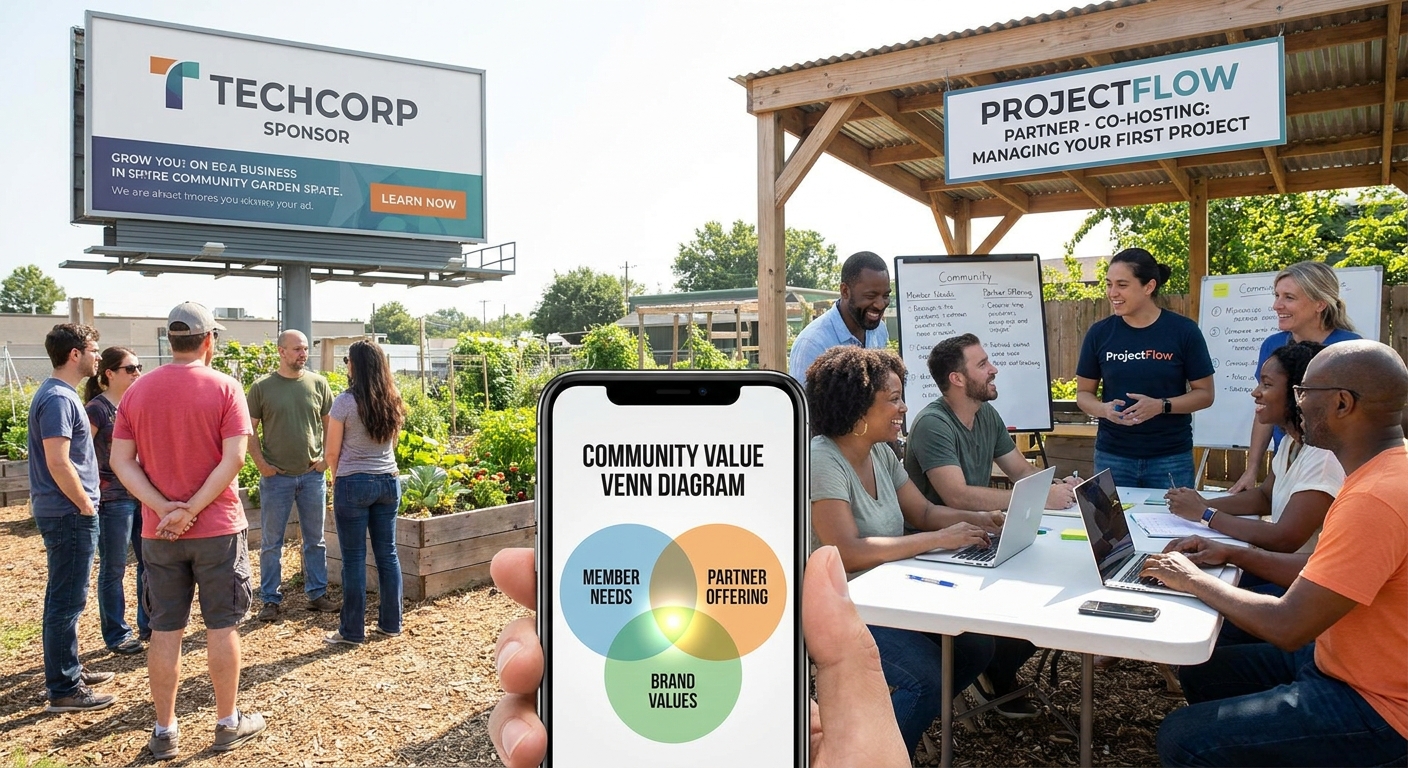
I once ran a community for new software developers. A big tech company offered us decent money for banner ads. Instead, we partnered with a project management tool that our members were already using and loving. Rather than plastering their logo everywhere, they co-hosted a workshop on “How to Not Implode During Your First Major Project.”
The members loved it. The partner got warm introductions to their exact target customer. And I slept like a baby knowing we hadn’t sold out.
The Only Venn Diagram You’ll Ever Need
So how do you actually find these perfect partners?
Forget cold Googling “companies that sponsor communities.” That’s amateur hour.
My process is much more organic.
I listen first. What tools are members already raving about in the chat? What books keep getting recommended? What problems keep coming up that no one has elegantly solved yet?
Those conversations become your hot list.
Then I bring out what I call the Value Venn Diagram. Picture three circles:
- Your community’s real needs (not surface-level wants)
- The partner’s genuine strengths (not their marketing fluff)
- Your non-negotiable brand values
The only partners worth your time live in that tiny intersection where all three overlap.
I’m ruthless about this. If a company’s values don’t align with ours, I don’t care how much money they’re waving at me. The partnership is dead on arrival. My unbreakable rule: If I wouldn’t enthusiastically recommend them to a community member over coffee, we’re not partnering.
Do your homework too. Get a demo. Talk to their actual customers. Your credibility is the most valuable thing you own—don’t stake it on a slick landing page.
Stop Selling Banner Ads (Your Members Already Ignore Them)
Once you’ve found the right partner, please, for the love of all that is good, do not sell them a banner ad.
Your members have spent years developing sophisticated blindness to banner ads. They’re like human ad-blockers with legs.
Instead, push for true integration.
Here are my favorite ways to do this:
- Co-created workshops and events: The accounting software that taught our freelance writers “Tax Myths That Keep Creatives Poor” is still talked about two years later.
- Member-only perks: A steep discount or early access that only exists because they’re part of our community.
- Community challenges: They provide the tools or prizes while we provide the structure and support.
- Resource collaborations: Joint guides, templates, or playbooks that members actually use.
The goal is to embed their value into the community experience rather than interrupt it.
Flip the Script When You Pitch
When it’s time to approach these potential partners, most people lead with numbers.
“We have 8,247 members!”
I hate this approach.
Instead, I flip the entire conversation. I lead with value and shared mission:
“We have a highly engaged group of professionals who are already actively discussing the exact problems your product solves. We’d love to explore creating something together that genuinely moves them forward.”
This changes everything. You’re no longer a vendor with eyeballs to sell. You’re a potential collaborator with a very specific, highly engaged audience.
The Sacred Partnership Agreement
Once they’re interested, get the partnership agreement in writing before emotions get involved.
This document isn’t just legal boilerplate. It’s a trust-preserving document. It should clearly spell out:
- What they will do
- What we will do
- What we absolutely won’t do (no surprise sales pitches, no data sharing, no last-minute changes)
Clear boundaries protect the relationship. I’ve never regretted being specific. I have regretted being vague.
Be Radically Transparent With Your Members
This last step is where most people trip up.
Tell your members exactly why you’re partnering and how it benefits them.
Don’t hide it. Don’t be weird about it. Frame it as the win-win that it actually is (assuming you’ve done your homework).
Something like: “We’ve brought in [Partner] because you keep asking for help with X. They’re running a workshop that directly addresses that, and they’ve created a special offer only for this community. Here’s why we trust them…”
When you’re transparent and the value is real, members don’t feel sold to. They feel supported.
The Big Takeaway
Here’s what I want you to burn into your memory:
Ditch the word “sponsor.”
Reframe everything as a true partnership.
Be ruthless about mission alignment.
Get creative about integration.
Stay radically transparent.
When you do these things, monetization stops feeling like selling out. It starts feeling like responsible stewardship—creating sustainable resources that let you serve your members even better.
This isn’t about choosing between revenue and integrity. The right partnerships give you both.
That’s it for Episode 17, my friend.
Next week in Episode 18: The Offline Bridge – Turning Digital Community Into Powerful In-Person Events, we’re going to explore how to move your online relationships into the real world without it feeling awkward or forced. I can’t wait.
In the meantime, I’d love to hear from you. How are you currently thinking about monetization in your community? Have you had a partnership that went really well—or really badly? Drop your thoughts in the comments. I read every single one.
Until next time, keep building with both heart and wisdom.
— Your Community Building Mentor
P.S. If you’re struggling with this balance in your own community, reply to this email or leave a comment. These conversations are why I do this work.